
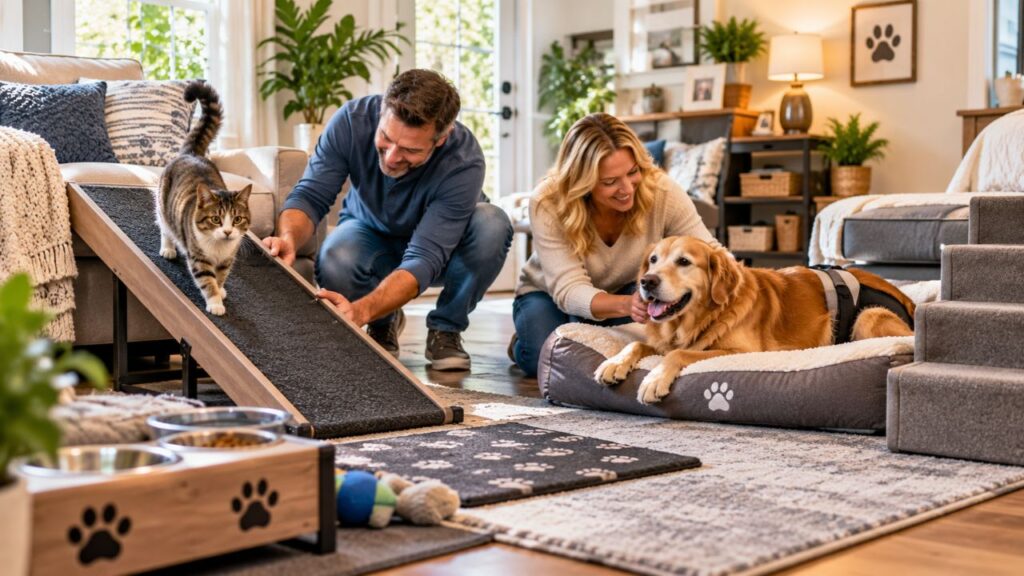
When a dog or cat begins having difficulty walking, climbing stairs, jumping, or getting up from a resting position, everyday activities around the house can become challenging. Older pets and those living with arthritis, neurological conditions, injuries, or other mobility problems may need a safer and more accessible home environment.
Fortunately, small changes around your home can make a significant difference. Creating better traction, improving access to food and water, reducing fall risks, and providing a comfortable resting area can help your pet move around more safely and maintain greater independence.
Here are practical ways to modify your home for a pet with limited mobility.

Start by Identifying the Areas Your Pet Struggles With
Before making changes, watch how your pet moves through the house.
Does your dog hesitate before walking across a hardwood floor? Does your cat have difficulty reaching the litter box? Does your pet struggle with stairs or jumping onto furniture? Identifying these challenges will help you focus on the areas where modifications can provide the most benefit.
You may not need to change the entire house. Start with the rooms and pathways your pet uses most often.
Make Slippery Floors Safer
Smooth surfaces such as tile, hardwood, laminate, and polished floors can be difficult for pets with weak legs or poor balance. Slipping can make movement stressful and may increase the risk of injury.
Consider placing:
- Non-slip rugs or runners along frequently used pathways
- Carpet or washable mats in sleeping and feeding areas
- Non-slip mats near doors and water bowls
- Secure floor coverings that will not slide when your pet walks over them
Avoid loose rugs that bunch up or move easily under your pet’s feet. The goal is to create stable walking surfaces that provide traction.
Create an Easy-to-Reach Resting Area
A pet with limited mobility may spend more time resting than a younger, healthier animal. Make sure your pet has a comfortable place to lie down without needing to climb stairs or jump onto furniture.
Choose a supportive bed that is easy to access. A low-entry bed can be particularly useful for pets that have difficulty lifting their legs or changing positions.
Place the bed in a quiet area where your pet can rest comfortably while still remaining close to the family.
For pets with significant mobility limitations, keeping the resting area on the main level of the home may also reduce unnecessary trips up and down stairs.
Keep Food and Water Within Easy Reach
Your pet should not have to walk across the entire house or climb stairs every time they need food or water.
Consider placing food and water bowls close to your pet’s primary resting area. Make sure the bowls are positioned where your pet can reach them comfortably without excessive bending or stretching.
If your pet has difficulty standing for long periods, ask your veterinarian whether an elevated feeding setup is appropriate. The right arrangement can vary depending on your pet’s condition.
Fresh water should remain easily accessible throughout the day.
Reduce the Need for Stairs
Stairs can become difficult or unsafe for pets with limited mobility. If your pet struggles with stairs, consider using a pet gate to prevent unsupervised access.
Whenever possible, arrange your pet’s essential resources on one level:
- Bed
- Food
- Water
- Toys
- Bathroom area
- Frequently used resting spaces
For some homes, a properly designed ramp may provide an alternative to stairs. However, ramps should have adequate traction and an appropriate slope for the individual pet.
Prevent Jumping From Furniture
Jumping onto or off beds, sofas, chairs, and other elevated surfaces can be difficult for pets with reduced mobility.
If your pet regularly jumps onto furniture, consider providing a stable ramp or pet steps when appropriate. You can also create a comfortable resting area at floor level to reduce the need for climbing altogether.
Do not assume that a pet will stop jumping simply because it has become more difficult. Managing access to elevated surfaces can help reduce unnecessary falls and strain.
Make Bathroom Areas Easier to Access
Mobility problems can make it harder for pets to reach their usual bathroom area.
For dogs, try to provide an easily accessible route to the outdoor bathroom area. Avoid making your pet navigate unnecessary stairs or slippery surfaces.
For cats, consider placing a litter box in an area that is easy to reach. A low-entry litter box may be easier for a cat with limited mobility to enter and exit.
If your pet suddenly begins having accidents in the house, do not assume that the problem is simply behavioral. Changes in bathroom habits can sometimes indicate an underlying medical problem and should be discussed with a veterinarian.
Remove Obstacles From Common Walking Paths
Pets with limited mobility may have difficulty navigating clutter.
Keep frequently used pathways clear of:
- Boxes
- Cables
- Small furniture
- Toys
- Loose objects
- Other obstacles that could cause tripping
Try to maintain a predictable layout, especially if your pet also has vision problems or cognitive changes.
A clear pathway between your pet’s bed, food, water, and bathroom area can make daily movement easier.
Consider Your Pet’s Ability to Get In and Out of the House
Outdoor access can become more difficult when a pet’s mobility declines.
Check whether your pet needs to navigate steps, uneven ground, slippery surfaces, or steep transitions to get outside. A secure ramp or modified pathway may make access easier in some situations.
During hot, cold, or wet weather, pay particular attention to outdoor surfaces and your pet’s ability to maintain balance.
Never leave a mobility-limited pet unattended in an area where a fall or other accident could occur.
Help Your Pet Stay Comfortable During Daily Activities
Mobility limitations can affect much more than walking. A pet may have difficulty grooming, changing sleeping positions, reaching food, or moving away from an uncomfortable area.
Keep frequently needed items nearby and minimize unnecessary movement.
You may also need to monitor your pet more closely for changes such as:
- Difficulty standing
- Increased slipping
- Reluctance to walk
- Trouble climbing stairs
- Changes in sleeping habits
- Reduced interest in normal activities
- Difficulty reaching food or water
- Changes in bathroom habits
These changes can provide useful information about how your pet’s condition is progressing.
Keep Your Home Comfortable for Senior and Chronically Ill Pets
Pets with limited mobility may benefit from a calm and predictable environment.
Try to maintain a comfortable room temperature and provide soft, supportive bedding. Avoid forcing your pet to repeatedly move between different areas of the house unnecessarily.
If your pet has a chronic illness or progressive mobility problem, their needs may change over time. A setup that works today may need to be adjusted later. Depending on the underlying condition, your veterinarian may also discuss complementary therapies such as acupuncture for pets in Phoenix as part of a broader care plan.
Regularly reassessing your pet’s environment can help you identify new challenges before they become significant problems.
When Mobility Problems Need Veterinary Attention
Home modifications can make the environment safer, but they do not address the underlying cause of mobility problems.
If your pet develops new or worsening difficulty walking, weakness, balance problems, or trouble standing, speak with your veterinarian. Pet pain management may also be an important part of maintaining your pet’s comfort and quality of life.
For pets living with chronic or progressive illness, veterinary guidance can also help you understand what changes may improve comfort and quality of life.
When Additional Comfort-Focused Care May Help
Some pets experience progressive mobility limitations as part of chronic or serious illness. When managing these conditions becomes increasingly difficult, families may benefit from discussing comfort-focused care with their veterinary team.
Palliative and hospice care can focus on maintaining comfort and quality of life while helping families manage the practical challenges of caring for a seriously ill pet at home.
At Restful Pets at Home, in-home hospice and palliative care can provide personalized support for pets and families in the Phoenix area. Care may include quality-of-life assessment, pain and symptom management, mobility assistance, and guidance on creating a more comfortable home environment.
Final Thoughts
Making your home safer for a pet with limited mobility does not necessarily require major renovations. Simple changes such as adding non-slip surfaces, removing obstacles, improving access to food and water, reducing stair use, and creating a comfortable resting area can make everyday life easier.
Most importantly, pay attention to changes in your pet’s abilities. As mobility declines, their needs may change as well. Working with your veterinarian and adjusting the home environment accordingly can help your pet remain comfortable, safe, and involved in family life for as long as possible.