About Hospice Care and Quality of Life Scale

Veterinary Hospice

In-home Veterinary Hospice is a wonderful option to help keep you and your pet comfortable and happy towards the end of their life. One of the biggest questions among those seeking hospice is, “how do I know it’s time?” Quality of Life is the biggest factor we focus on during hospice care, and the best person to evaluate that for your pet is you! We’re here to help guide you through the physical and emotional attributes of your pet and how to assess them. Our personalized quality of life scale can help you track the most important aspects of your pets life to ensure they are comfortable and happy, and help you to know “when it’s time.” Starting to fill this chart out prior to our visit can really help us understand on a deeper level what your pet needs, not just medically, towards the end of their life.

Also included in this document are some resources with links that we may talk to you about during your appointment. We know that considering end of life care can be stressful, but we want to make this as smooth for you and your pet as possible. If you have any questions prior to your appointment, please be sure to mention that on your intake forms, and any questions afterwards your doctor will be happy to answer. Follow up appointments are available as needed as well.

We look forward to meeting you and your pet and working together for a happy and comfortable hospice experience.
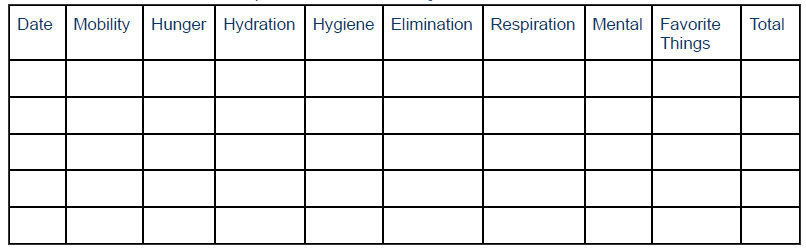

Quality of Life Scale

Categories are assessed from 1-5, with examples for 1, 3, and 5. A score of 40 is the highest attainable. A score of 30-40 we can be confident your pet is happy and comfortable. A score of 15-30 indicates that intervention is needed or our treatment plan needs to be changed. A score of under 15 is where we may want to be considering euthanasia.
Quality of Life Scale

Mobility

5: Moves without pain, can go on walks, jump on furniture, etc.
3: Difficulty getting up, stiff when walking.
1: Can’t or doesn’t want to get up, crying/wincing when touched.

Hunger

5: Good or normal appetite, willingly eats regular food.
3: On/off appetite, willingly eats treats, may need tempting.
1: Not eating at all.

Hydration

5: Normal/adequate intake.
3: Abnormal intake (decreased or increased).
1: No intake / dehydration.

Hygiene

5: Can groom themselves without assistance; no foul odors.
3: Needs some help to stay clean; may have odor from skin issues, leaky tumors, etc.
1: Urinating/defecating on self; foul odor; pressure sores, etc.

Elimination

5: Normal urination/defecation.
3: Reduced/irregular; less frequent; some diarrhea or abnormal urination.
1: Consistently irregular; diarrhea, incontinence, or lack of urination.

Respiration

5: Normal respiratory rate (15–30 bpm).
3: Increased rate/effort (>40 bpm); coughing.
1: Struggling to breathe; pale/gray/blue gums; open-mouth breathing/gasping.

Mental

5: No signs of stress, anxiety, or dementia.
3: Some new stress/anxiety/confusion (e.g., pacing, nighttime changes); less social; grumpy.
1: Severe stress/anxiety or dementia; aggression, hiding, or indifference to family/pets.

Favorite Things

Think of 3–5 of your pet’s favorite things and use these each time.

5: Still wants to do favorite things (ball, walks, snacks, belly rubs, etc.).
3: Less inclined to do favorite things.
1: No interest in any favorite things.

We believe no pet should ever suffer...

How Can We Help?

or Call
